Nabh24Nabh24 Udaan · Issue 1
हिंदी
Udaan
Weekly knowledge magazineIssue 1 · 9–15 October 2026Free · English edition
Cover story: Genius

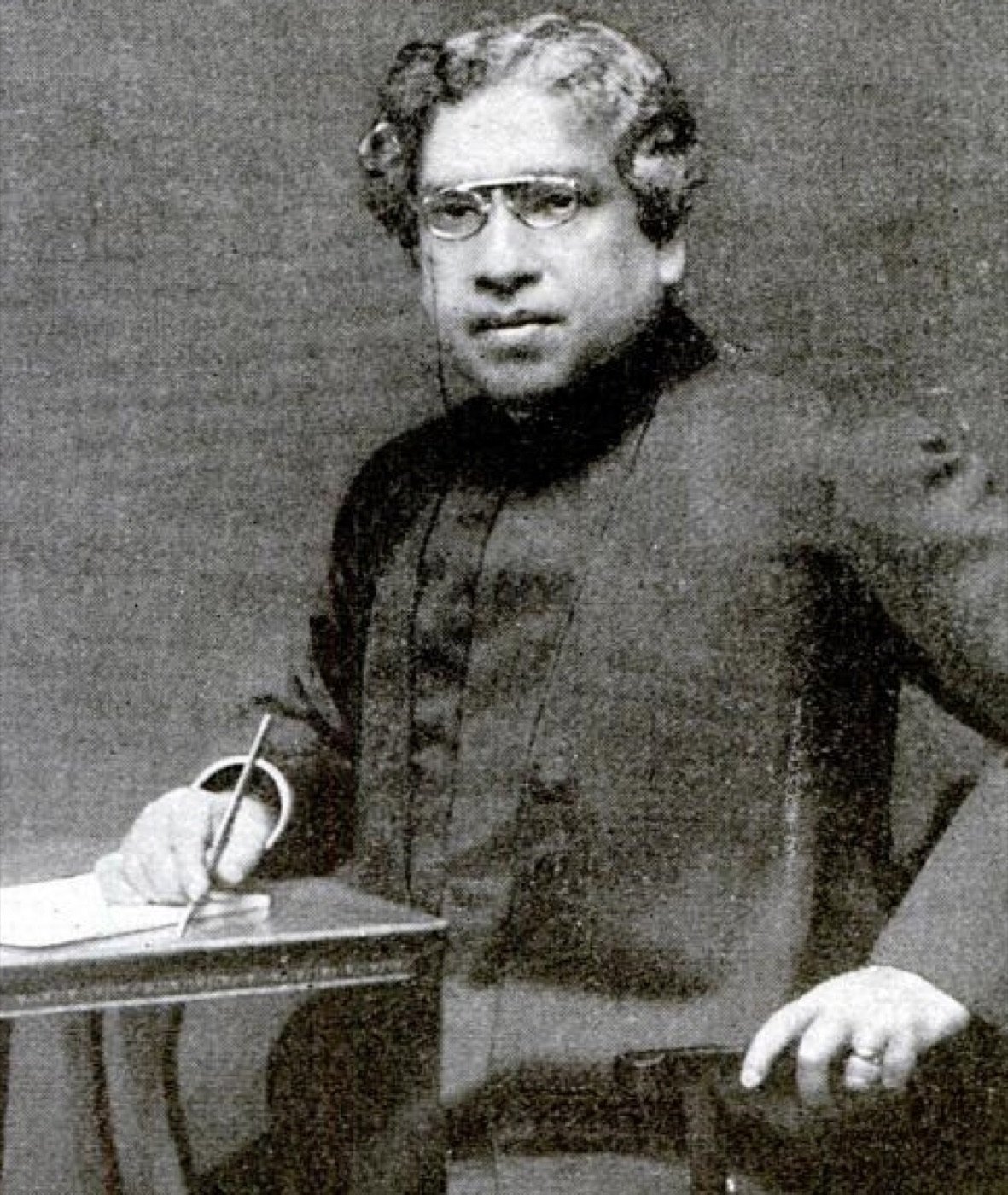
The Indian who sent waves through walls

In 1895 Jagadish Chandra Bose showed the power of radio waves in Calcutta, refused to accept unequal pay, and measured the 'pulse' of plants. The full story of a genius, inside.

  • Current AffairsThe week's big stories and 21 exam one-liners
  • Tech History & ResearchThe transistor: the 1947 invention that built the digital world
  • Global Tech StoryLinux: a student's hobby that now runs the world
  • Failure StoryKodak invented the digital camera, then lost to it
  • Success StoryAmul: how farmers built India's biggest food brand
  • Little-known Facts10 true facts you probably never knew, plus a quiz
Knowledge · Motivation · Current AffairsPhoto: Unknown author / Wikimedia Commons (Public domain)
Nabh24Udaan · Issue 1Contents
From the editor

The first flight

Welcome. You are holding the first issue of Nabh24 Udaan. Every week this magazine will bring you two things: knowledge that helps in exams and in life, and stories that give you the courage to keep going.

In this issue you will read how an Indian scientist answered an insult with hard work, how a tiny transistor changed the world, how a student's hobby now runs billions of phones and computers, how the world's biggest camera company lost to its own invention, and how milk farmers in Gujarat made history together.

Every fact in these pages has been checked against reliable sources, and all the sources are listed online with this issue. There is a quiz near the end: read first, then test yourself.

Keep reading, keep learning, and keep flying high.

— Udaan Desk, Nabh24

9–15 October 20262nabh24.com/udaan
Nabh24Udaan · Issue 1Current Affairs
Current Affairs
Current Affairs

National

Pension schemes renamed, Governors changed in six states and indigenous defence deals

Social pensions get new names and higher disability support

On 14 October the Union Cabinet approved ₹53,428 crore to run the National Social Assistance Programme (NSAP) for five years, 2026-27 to 2030-31. NSAP is renamed Pradhan Mantri Samajik Sahayata Yojana, and the "Indira Gandhi" prefix is dropped from its old-age, widow and disability pension schemes. Disability pension rises from ₹300 to ₹375 a month (₹625 for those 80 and above), the benchmark disability falls from 80% to 40%, and the minimum age limit is removed.

Railway bonus

The Cabinet also cleared a 78-day Productivity Linked Bonus worth ₹2,009.61 crore for about 11.4 lakh railway employees, capped at ₹17,951 per person.

Six states get Governor changes

On 12 October President Droupadi Murmu named Sudha Yadav (Karnataka), Braj Mohan Ram (Odisha), Dhal Singh Bisen (Uttarakhand) and Dushyant Gautam (Sikkim) as Governors. O.P. Mathur moved from Sikkim to Keralam, and Rajendra Arlekar became full-time Governor of Tamil Nadu.

₹4,106-crore defence contracts

On 15 October the Defence Ministry signed for the GSAT-7C communication satellite for the Air Force (₹2,563 crore, NSIL) and Varunastra heavyweight torpedoes for the Navy (₹1,543 crore, BDL). Both are indigenous.

BS-VII draft and caller names

The Road Transport Ministry released draft BS-VII emission norms for new cars and SUVs from 1 April 2029, covering brake and tyre dust for the first time. Separately, DoT ordered all telecom operators to show the caller's name (CNAP) on 4G and 5G calls from 1 November 2026.

Chennai Metro Phase II opens

On 11 October PM Narendra Modi and Tamil Nadu CM C. Joseph Vijay opened the 14.6-km Poonamallee–Vadapalani stretch, with 11 elevated stations, of the 118.9-km Phase II project.
9–15 October 20263nabh24.com/udaan
Nabh24Udaan · Issue 1Current Affairs
Current Affairs

Economy & Business

Inflation picks up, but exports surge

Prices climb: CPI at 5.54%, WPI at 11.39%

Retail inflation rose to 5.54% in September from 4.83% in August, data released on 12 October showed. Food inflation hit 7.74%, led by onion prices that more than doubled. It is the highest reading since the new CPI series (base year 2024) began in January. Wholesale (WPI) inflation, released on 14 October, jumped to 11.39%, a record for the new WPI series (base year 2022-23), driven by food, fuel and manufactured goods.

Exports jump 23% in September

Merchandise exports grew 23.04% to $44.40 billion in September, while imports rose 8% to $74.61 billion. The trade deficit narrowed to $30.21 billion, from $33 billion a year ago. Electronics exports rose about 70% and gold imports fell 81%.

China becomes top trading partner in H1

India-China trade rose nearly 29% to $91.76 billion in April-September 2026-27, putting China ahead of the US ($83.14 billion). The trade deficit with China widened to $68.93 billion. The US remained India's largest export destination.

Fairfax to take control of IDBI Bank

On 14 October the Cabinet Committee on Economic Affairs approved the sale of a 60.72% stake in IDBI Bank to Canada-based Fairfax Financial Holdings for ₹52,878 crore (₹81 a share). The government will keep 15% and LIC 19%. The government called it the largest FDI ever in India's financial sector.

Direct tax collections up 13%

Net direct tax collections rose 13.21% to ₹13.38 lakh crore between 1 April and 14 October. Gross collections were ₹16.03 lakh crore, and net corporate tax grew 20.58%.

Results season

HCLTech reported a September-quarter net profit of ₹5,132 crore, up 21%, on revenue of ₹35,620 crore.

9–15 October 20264nabh24.com/udaan
Nabh24Udaan · Issue 1Current Affairs
Current Affairs

World, Sci-Tech & Sports

The Nobels wrap up, tension in West Asia and Asian Games medallists honoured

Nobel Peace Prize for Navi Pillay

On 9 October the Norwegian Nobel Committee awarded the 2026 Peace Prize to Navanethem "Navi" Pillay, a South African jurist of Indian Tamil origin, "for her efforts to promote peace and international law". Born in Durban in 1941, she served on the UN tribunal for Rwanda and was UN High Commissioner for Human Rights.

Economics Nobel

On 12 October Robert E. Hall (Stanford) and Michael Woodford (Columbia) won the economics prize for "microeconomic foundations of macroeconomic stabilisation", the last Nobel of 2026.

Pakistan: emergency in Khyber Pakhtunkhwa

President Asif Ali Zardari imposed a six-month emergency and governor's rule in Khyber Pakhtunkhwa, removing the PTI provincial government. Chief Minister Sohail Afridi was taken into preventive custody.

Ship sinks in Strait of Hormuz

A cargo ship carrying about 2,500 containers sank in the Strait of Hormuz on 14 October. Iran said it hit a mine; a US official said Iran attacked it.

AI fighter prototype

Bengaluru start-up Flying Wedge displayed a static prototype of FWD Supreme, an AI-piloted fighter of about 1.5 tonnes, in New Delhi on 13 October. It has not flown yet.

Asian Games: 85 medals

On 15 October PM Modi met India's medallists from the Aichi-Nagoya Asian Games, where India finished fourth with 85 medals (21 gold, 27 silver, 37 bronze). Both hockey teams won gold: the men beat Malaysia 5-1, the women beat China 1-0.

Cricket and football

West Indies beat India by 24 runs in the fourth T20I in Hyderabad on 14 October, levelling the series 2-2; Shai Hope hit 102 not out off 50 balls. India's U17 women's football team qualified for the AFC U17 Women's Asian Cup 2027 in China, scoring 20 goals without conceding.

9–15 October 20265nabh24.com/udaan
Nabh24Udaan · Issue 1Current Affairs
Quick Revision

One-liners for exams

9-15 October 2026

The week's key facts in one line each. Read them twice before your next mock test.

  • Nobel Peace Prize 2026: Navi Pillay, South African jurist of Indian Tamil origin (announced 9 October).
  • Economics Nobel 2026: Robert E. Hall and Michael Woodford, for macroeconomic stabilisation research.
  • NSAP renamed Pradhan Mantri Samajik Sahayata Yojana; outlay ₹53,428 crore for 2026-27 to 2030-31.
  • Disability pension under the scheme: ₹375 a month; benchmark disability cut from 80% to 40%.
  • Railway staff bonus 2026: 78 days' wages, ₹2,009.61 crore, about 11.4 lakh employees.
  • New Governor of Karnataka: Sudha Yadav; of Odisha: Braj Mohan Ram.
  • New Governor of Uttarakhand: Dhal Singh Bisen; of Sikkim: Dushyant Gautam; of Keralam: O.P. Mathur.
  • Rajendra Arlekar is now full-time Governor of Tamil Nadu.
  • Prakash Rajpurohit, 2010-batch IAS officer, appointed Deputy Election Commissioner.
  • L. Murugan's resignation as Minister of State accepted by the President under Article 75(2).
  • GSAT-7C: Air Force communication satellite, ₹2,563-crore contract with NSIL.
  • Varunastra: indigenous heavyweight torpedo, ₹1,543-crore Navy order to BDL, Hyderabad.
  • BS-VII emission norms (draft) to apply to new cars and SUVs from 1 April 2029.
  • CNAP caller-name display mandatory on 4G and 5G calls from 1 November 2026.
  • September 2026 CPI inflation: 5.54% (base year 2024); WPI inflation: 11.39%.
  • September 2026 exports: $44.40 billion (up 23.04%); trade deficit $30.21 billion.
  • China was India's largest trading partner in April-September 2026-27: $91.76 billion.
  • Fairfax Financial Holdings (Canada) to buy 60.72% of IDBI Bank for ₹52,878 crore.
  • Net direct tax collections till 14 October: ₹13.38 lakh crore, up 13.21%.
  • Asian Games 2026 (Aichi-Nagoya, Japan): India fourth with 85 medals, including 21 gold.
  • Smriti Mandhana named UNICEF India Celebrity Advocate on International Day of the Girl (11 October).
9–15 October 20266nabh24.com/udaan
Nabh24Udaan · Issue 1Tech History & Research
Tech History & Research
Technology History

The Tiny Switch That Changed the World

How three Bell Labs scientists ended the age of the vacuum tube

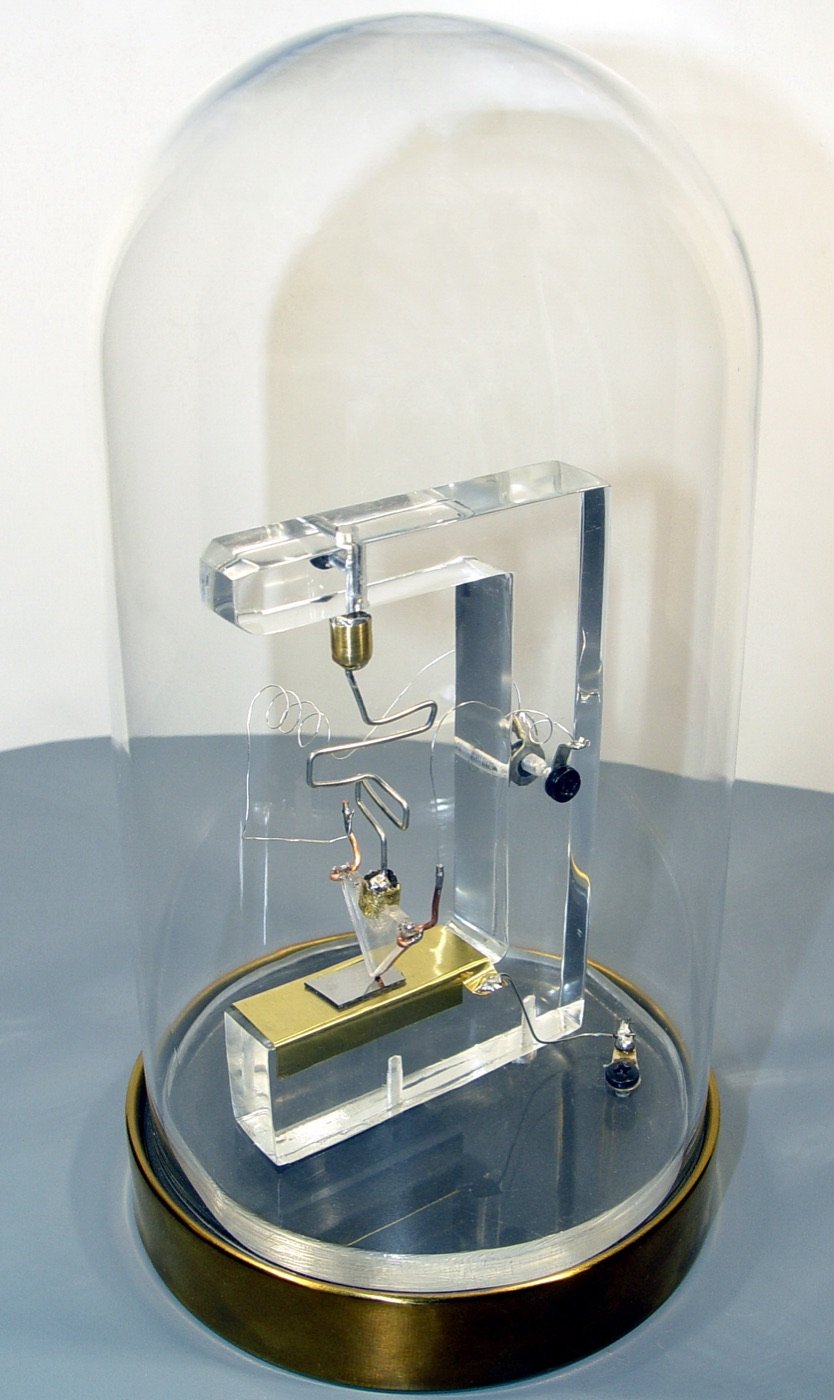
A replica of the first working transistor, built at Bell Labs in 1947. Photo: Mister rf, Wikimedia Commons, CC BY-SA 4.0

Every phone, laptop and satellite depends on a part most people never see: the transistor, a tiny electronic switch and amplifier made from a semiconductor.

A Christmas present at Bell Labs

At Bell Labs in the United States, John Bardeen and Walter Brattain, members of a research group organised by William Shockley, pressed two gold contacts onto a small slab of germanium. On 16 December 1947 the device amplified a signal. On 23 December they showed it to lab officials, and Shockley called it "a magnificent Christmas present".

Why it beat the vacuum tube

Electronics then ran on vacuum tubes: fragile glass bulbs with heaters that wasted power. Transistors were smaller and tougher, worked on small batteries and used far less energy.

1947Point-contact transistor demonstrated at Bell Labs
1948Bell Labs announces the transistor to the public
1956Bardeen, Brattain and Shockley share the Nobel Prize in Physics
1958Jack Kilby of Texas Instruments builds the first integrated circuit
1959Robert Noyce patents a silicon chip that can be mass-produced
1971Intel 4004 microprocessor puts 2,300 transistors on one chip
9–15 October 20267nabh24.com/udaan
Nabh24Udaan · Issue 1Tech History & Research
Research Today

From 2,300 to 184 Billion

The transistor keeps shrinking, and scientists keep finding new tricks

In 1965 Gordon Moore, who later co-founded Intel, noticed that the number of components on a chip was doubling every year. In 1975 he revised his estimate to a doubling every two years. This prediction, known as Moore's law, is not a law of nature. It became a target that the chip industry raced to meet for decades.

How many is "many"?

The Intel 4004 of 1971 held 2,300 transistors. Apple's M3 Ultra, announced in March 2025, holds 184 billion. That is about 8 crore times more.

What researchers are working on now

  • Gate-all-around transistors: the gate, which turns the switch on and off, wraps the channel on all sides for better control at tiny sizes. Samsung began producing 3-nanometre chips with this design in June 2022. Intel calls its version RibbonFET.
  • Chiplets: instead of one large slab of silicon, smaller chips are joined inside one package. The M3 Ultra itself links two M3 Max dies through more than 10,000 connections.

India's push

In December 2021 the Union Cabinet approved Rs 76,000 crore for semiconductor and display manufacturing and set up the India Semiconductor Mission. In September 2026, at SEMICON India 2026, the government unveiled its roadmap for Semicon 2.0, with a focus on chip design, equipment, fabs, advanced packaging, research and talent.

Takeaway for students

The transistor began as a lab experiment with gold contacts and a piece of germanium. Every chip since then has grown out of the same school subjects: physics, chemistry and mathematics. Learn them well, and the next breakthrough could come from an Indian lab.

9–15 October 20268nabh24.com/udaan
Nabh24Udaan · Issue 1Genius
Genius
Genius

The Man Who Sent Waves Through Walls

Long before radio filled the world, a professor in Calcutta was working with waves just millimetres long.

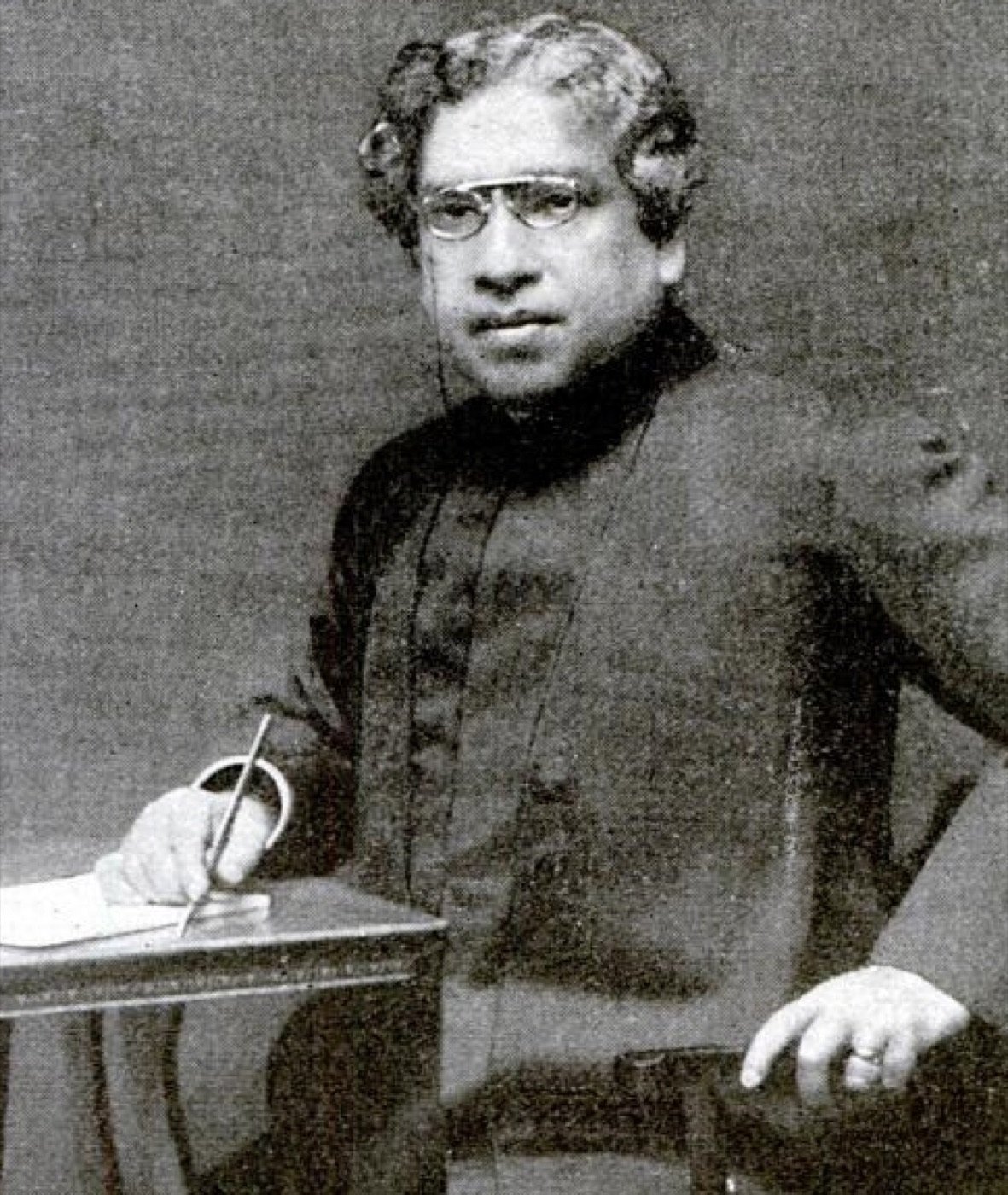
Sir Jagadish Chandra Bose (1858–1937). Photo: Wikimedia Commons, public domain

In January 1885, Jagadish Chandra Bose became a professor of physics at Presidency College, Calcutta. He had studied at Cambridge and London. Yet the rule of the day was plain: an Indian professor was paid about one-third of a European colleague's salary.

Bose would not accept the smaller cheque. He refused to take any salary at all, and taught for three years without pay. In the end the college made his post permanent, with retrospective effect.

A laboratory in a small room

In November 1894 he began research in a small room at the college. A year later, at Calcutta's Town Hall, he sent invisible microwaves through two walls, across about 23 metres, to ring a bell and ignite gunpowder.

He worked with wavelengths of about 5 mm and frequencies as high as 60 GHz. He was also the first to use a semiconductor junction, a galena crystal, to detect radio waves.

9–15 October 20269nabh24.com/udaan
Nabh24Udaan · Issue 1Genius
Genius

The Man Who Listened to Plants

After radio, Bose asked a question nobody expected from a physicist.

Having sent waves through walls, Bose turned to living things. Do plants respond to the world the way animals do?

To find out, he built the crescograph, an instrument that recorded tiny growth movements at the tip of a plant. Using two levers, each magnifying 100 times, it could enlarge that movement about 10,000 times. Bose argued that plant and animal tissues show deep parallels in how they respond to stimuli.

A temple of science

On his 60th birthday, 30 November 1917, he dedicated the Bose Institute in Calcutta to the nation, and led it for the rest of his life. He was knighted the same year.

Not merely a laboratory but a temple. — J.C. Bose
1858Born on 30 November in Mymensingh, Bengal (now Bangladesh)
1885Becomes professor of physics at Presidency College, Calcutta
1895Public microwave demonstration at Calcutta Town Hall
1917Knighted; founds the Bose Institute
1920Elected Fellow of the Royal Society
1937Dies on 23 November in Giridih

In 2012, IEEE, the world's largest engineering body, named his millimetre-wave experiments a Milestone, with a plaque at Presidency College.

The lesson for students

Bose had no big laboratory and no equal pay. What he had were questions, patience and self-respect, and he chose to share his ideas openly rather than lock them away. Small resources do not make small work. The size of your work is decided by the size of your questions.

9–15 October 202610nabh24.com/udaan
Nabh24Udaan · Issue 1Global Tech Story
Global Tech Story
International Tech Story

"Just a Hobby" That Changed the World

How a 21-year-old student in Helsinki started Linux

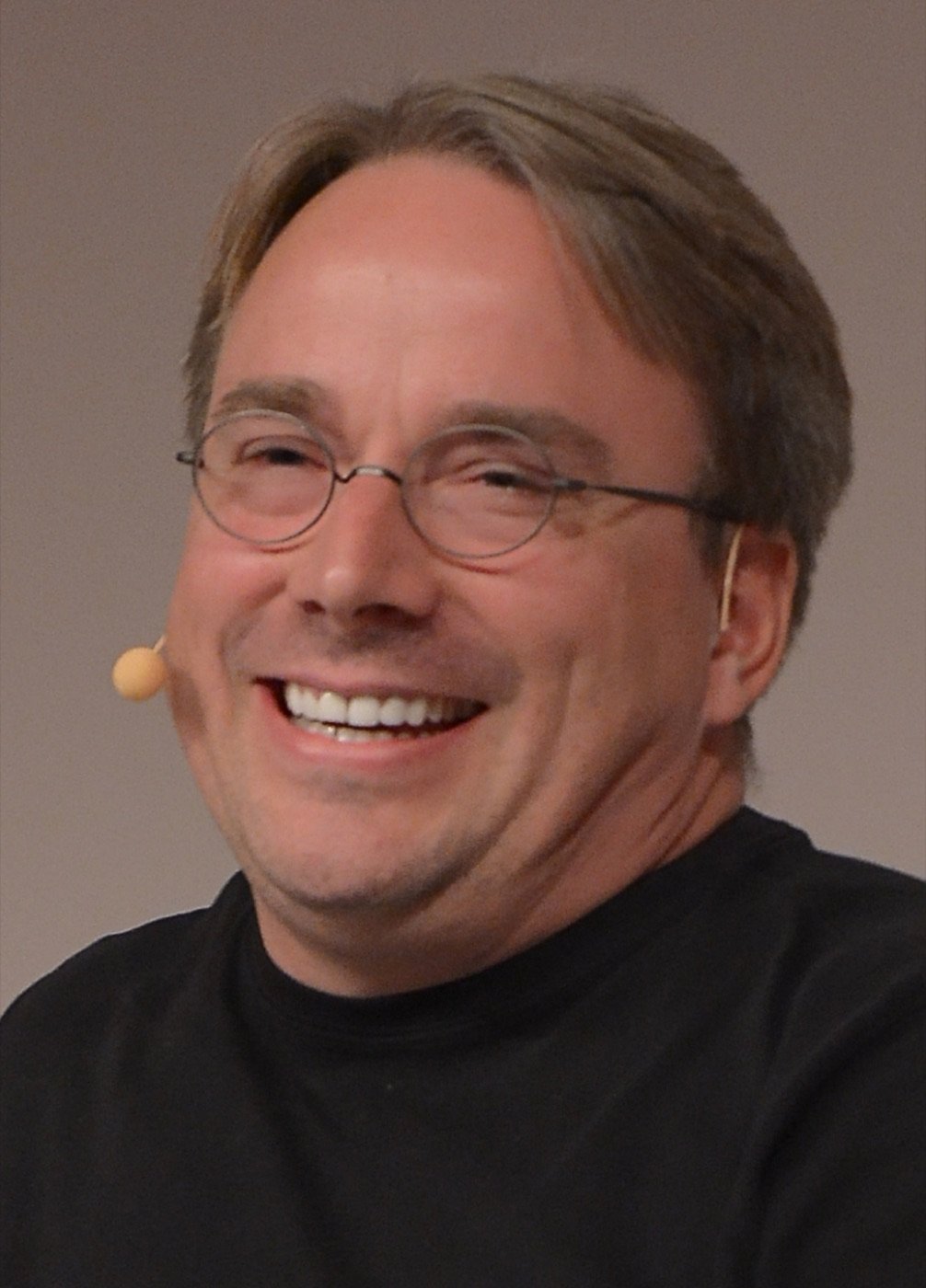
Linus Torvalds at LinuxCon Europe 2014 in Düsseldorf. Photo: Krd (crop: Von Sprat), Wikimedia Commons, CC BY-SA 4.0

In 1991, Linus Torvalds was a computer science student at the University of Helsinki in Finland. He had a new PC with an Intel 386 processor and wanted software that could use its full power. So he began writing an operating system kernel of his own.

On 25 August 1991, aged 21, he announced it on the Usenet newsgroup comp.os.minix:

I'm doing a (free) operating system (just a hobby, won't be big and professional like gnu) for 386(486) AT clones. — Linus Torvalds

The first version, Linux 0.01, was released on 17 September 1991. Torvalds had wanted to call it Freax, but Ari Lemmke, a volunteer who ran the FTP server where the files were uploaded, named the folder "Linux". The name stuck.

Free to use, free to change

In 1992 Torvalds moved Linux to the GNU General Public License (GPL). Anyone may use, study, change and share the code, but changed versions that are passed on must stay open too. This idea of shared source code is the heart of open source.

9–15 October 202611nabh24.com/udaan
Nabh24Udaan · Issue 1Global Tech Story
Linux Today

From One PC to Phones and Supercomputers

How volunteers and companies build one of the world's biggest shared projects

The student's hobby is now one of the largest open-source projects in the world.

In your pocket

Android, the leading operating system on smartphones, is built on the Linux kernel. Google takes long-term supported Linux kernels and adds Android-specific changes on top. So every Android phone runs a kernel whose story began in a Helsinki student's room.

Inside the fastest computers

The TOP500 project ranks the world's 500 most powerful supercomputers twice a year. Since November 2017, every single system on the list has run a Linux-based operating system.

In servers and the cloud

Linux is the leading operating system on servers. Estimates from 2024 suggest it handles at least 80% of public cloud workloads, on platforms such as Amazon Web Services, Microsoft Azure and Google Cloud.

Built together

Volunteers and companies work on the same code. A 2017 analysis of the kernel found that well over 85% of the code came from programmers paid for their work, by firms such as Intel, Samsung, Google and AMD. Rival companies improve one shared kernel because all of them depend on it.

The lesson

Linux did not begin as a grand plan. It began with one student solving his own problem and sharing the result openly, with a humble note asking for feedback. Start small, share your work, and welcome help from others. That is how a hobby grew into software that runs much of the modern world.

9–15 October 202612nabh24.com/udaan
Nabh24Udaan · Issue 1Failure Story
Failure Story
Failure Story

Kodak: The Company That Saw the Future First

The digital camera was born in its own laboratory in 1975

Kodak World Headquarters in Rochester, New York (Photo: Luxhunter68, CC BY-SA 3.0, Wikimedia Commons)

For most of the 20th century, taking a photo meant one name: Kodak. In 1888 George Eastman sold a simple camera with a famous promise: "You press the button, we do the rest." Customers took their pictures, and Kodak developed the film.

By 1976 Kodak had about 90% of film sales and 85% of camera sales in the United States. "Kodak moment" became an everyday phrase for a moment worth keeping.

A camera the size of a toaster

In 1975 a young Kodak engineer, Steven Sasson, was asked to try building an electronic camera around a new light sensor called a CCD. His prototype weighed about 3.6 kg and made black-and-white pictures of just 100 x 100 pixels, or 0.01 megapixel. Each picture was stored on a cassette tape and could be seen only on a TV screen.

It only took 50 milliseconds to capture the image, but it took 23 seconds to record it to the tape. — Steven Sasson

Kodak executives watched a few demonstrations but did not see a market for it. Sasson was not allowed to talk about the camera in public or show it outside the company. Kodak received a patent for it in 1978.

9–15 October 202613nabh24.com/udaan
Nabh24Udaan · Issue 1Failure Story
Failure Story

Why Kodak Fell, and What It Teaches

Kodak did not ignore digital. It could not let go of film.

George Eastman saw early that film earned more than cameras. Kodak sold a camera once, but customers bought film, paper and chemicals for years. This razor-and-blades model kept Kodak rich for decades, and its revenue peaked at $16 billion in 1996.

Digital photography needs no film and no printing. Kodak's own staff saw this coming: a 1979 internal report by Larry Matteson predicted a complete shift to digital by 2010. But film sales kept rising through the 1990s, and executives were reluctant to pour money into a small new market.

Kodak did make digital cameras. By 2005 it was No. 1 in US digital camera sales, but margins were thin and cameras were often sold at a loss. Then phones absorbed the camera. By 2010 Kodak's share was about 7%.

1888First Kodak camera on sale
1975Sasson builds the digital camera prototype
1996Revenue peaks at $16 billion
2005No. 1 in US digital camera sales
2012Chapter 11 bankruptcy filed, 19 January
2013Emerges from bankruptcy, 3 September

Kodak today

A much smaller Kodak now works in commercial printing, advanced materials and chemicals, and motion-picture film, and licenses its brand to other makers. Its 2025 revenue was about $1.07 billion.

Lessons

  • Your cash cow can become a trap. Kodak guarded film profit instead of building the next one.
  • Inventing is not owning. Kodak invented the digital camera; others built the business.
  • Follow the profit, not the product. Value moved from cameras to phones and sharing.
  • A correct forecast is useless without action. Kodak's warning came 30 years early.
9–15 October 202614nabh24.com/udaan
Nabh24Udaan · Issue 1Success Story
Success Story
Success Story

Verghese Kurien: The Engineer Who Stayed

How farmers of one Gujarat district built a brand they own themselves

The Amul trinity: Verghese Kurien, Tribhuvandas Patel and H.M. Dalaya (Photo: Naik family collection, CC BY-SA 4.0, Wikimedia Commons)

In 1949 the Government of India sent a young engineer, Verghese Kurien, to its experimental creamery in Anand, Gujarat. He had studied in the United States and did not plan to stay long.

Nearby, the farmers of Kaira district were angry. A private dairy, Polson, controlled milk collection and fixed prices as it liked. Led by Tribhuvandas Patel, and on Sardar Vallabhbhai Patel's advice, they formed their own co-operative. The Kaira District Co-operative Milk Producers' Union was registered on 14 December 1946.

Kurien began helping Tribhuvandas repair the union's dairy equipment in the evenings. Tribhuvandas persuaded him to stay, and Kurien stayed for the rest of his life.

Owned by the farmers

Each village formed its own co-operative society. Farmers sold their milk to it, the union processed and marketed it, and the earnings went back to the farmers instead of to a private owner.

The "impossible" powder

Dairy experts around the world believed buffalo milk could not be spray-dried because of its high fat content. Kurien's colleague H.M. Dalaya proved them wrong. In 1955 the world's first spray-dryer for buffalo milk was installed at the Anand dairy. From 1955 the union sold its products under one name: Amul.

9–15 October 202615nabh24.com/udaan
Nabh24Udaan · Issue 1Success Story
Success Story

Operation Flood: From Milk Shortage to World No. 1

The Anand model went national, and India's milk story changed

In 1965 Prime Minister Lal Bahadur Shastri asked Kurien to repeat the Anand model across India, and the National Dairy Development Board (NDDB) was set up. In 1970 NDDB launched Operation Flood, later called the White Revolution.

The first phase was paid for by selling milk powder and butter oil donated by the European Economic Community. It linked 18 milk-producing regions to Delhi, Mumbai, Kolkata and Chennai. By the end of 1985 the programme covered 43,000 village co-operatives and 42.5 lakh milk producers. It ran in three phases until 1996.

In 1998 India overtook the United States to become the world's largest milk producer. In 2024-25 it produced 247.87 million tonnes of milk.

1946Kaira union registered, 14 December
1949Kurien arrives in Anand
1955First buffalo-milk spray-dryer at Anand
1965NDDB set up
1970Operation Flood begins
1998India becomes No. 1 in milk

Amul today

Amul is marketed by the Gujarat Co-operative Milk Marketing Federation (GCMMF), set up in 1973 and owned by about 36 lakh farmers. In 2025-26 the Amul brand's total turnover crossed Rs 1 lakh crore; GCMMF's own sales were Rs 73,450 crore. Kurien died in 2012. His birthday, 26 November, is National Milk Day.

Lessons

  • Ownership changes behaviour. Farmers who own the dairy have every reason to protect it.
  • Build the whole chain. Collection, processing and selling were built together.
  • Question what experts call impossible. Buffalo-milk powder was one such "impossible".
  • Scale what works. Operation Flood copied a proven village model.
9–15 October 202616nabh24.com/udaan
Nabh24Udaan · Issue 1Little-known Facts
Little-known Facts
Little-known facts

True, But Hard to Believe

Ten facts from India, space and nature, each checked against a reliable source.

  • Shampoo is a Hindi word: It entered English in 1762 from "chāmpo", meaning massage the head. In 1821 Sake Dean Mahomed opened a shampooing bath in Brighton, England.
  • A day longer than a year: Venus takes about 243 Earth days to spin once, but only about 225 to circle the Sun. It spins backwards, so the Sun rises in the west.
  • Three hearts, blue blood: An octopus has two hearts for its gills and one for its body. A copper-rich protein, haemocyanin, makes its blood bluish.
  • A banana is a berry: Botanically, bananas count as berries but strawberries do not. Their tiny seed-like dots are the real fruits.
  • Nearly one to one: A 2016 study estimated about 38 trillion bacteria and 30 trillion human cells in a 70 kg body. The old "ten to one" claim was wrong.
  • Sixteen sunrises a day: The International Space Station circles Earth about every 90 minutes, so its crew sees around 16 sunrises every day.
  • Moon water, found via India: NASA's Moon Mineralogy Mapper, flying on ISRO's Chandrayaan-1, helped detect water molecules on the lunar surface, announced in September 2009.
  • Farming below the sea: In Kerala's Kuttanad, farmers grow rice 1.2 to 3 metres below sea level. The FAO named it a global agricultural heritage system in 2013.
  • A meteorite's footprint: Lonar Lake in Maharashtra's Buldhana district fills a crater about 1.8 km wide, made when a meteorite struck basalt rock.
  • Space began near a church: India's first rocket, a US-made Nike-Apache, lifted off from Thumba near Thiruvananthapuram on 21 November 1963. The local bishop had given the church's prayer hall and his own room to the scientists.
9–15 October 202617nabh24.com/udaan
Nabh24Udaan · Issue 1Quiz
Test yourself

Udaan Quiz: 15 questions from this issue

  1. What is the new name of the National Social Assistance Programme (NSAP)?

    1. a) Pradhan Mantri Jan Kalyan Yojana
    2. b) Pradhan Mantri Samajik Sahayata Yojana
    3. c) Rashtriya Pension Suraksha Yojana
    4. d) Pradhan Mantri Garib Sahayata Yojana
  2. Who won the 2026 Nobel Peace Prize?

    1. a) Anne Carson
    2. b) Francis Halzen
    3. c) Navi Pillay
    4. d) Michael Woodford
  3. Fairfax Financial Holdings, which is buying 60.72% of IDBI Bank, is based in which country?

    1. a) United States
    2. b) United Kingdom
    3. c) Japan
    4. d) Canada
  4. Where was the first point-contact transistor demonstrated in December 1947?

    1. a) Texas Instruments
    2. b) Bell Labs
    3. c) Intel
    4. d) IBM
  5. How many transistors did the 1971 Intel 4004 microprocessor have?

    1. a) 230
    2. b) 2,300
    3. c) 23,000
    4. d) 230,000
  6. In which year did J.C. Bose found the Bose Institute?

    1. a) 1895
    2. b) 1905
    3. c) 1917
    4. d) 1937
  7. Which crystal did Bose use as a semiconductor detector of radio waves?

    1. a) Quartz
    2. b) Galena
    3. c) Diamond
    4. d) Silicon
  8. At which university was Linus Torvalds a student in 1991?

    1. a) University of Helsinki
    2. b) Stanford University
    3. c) University of Cambridge
    4. d) MIT
  9. Which licence did Linux move to in 1992?

    1. a) MIT License
    2. b) GNU General Public License (GPL)
    3. c) Apache License
    4. d) Creative Commons
  10. Who built Kodak's first digital camera prototype in 1975?

    1. a) Steven Sasson
    2. b) George Eastman
    3. c) Larry Matteson
    4. d) Henry Strong
  11. In which year did Kodak file for Chapter 11 bankruptcy?

    1. a) 2008
    2. b) 2010
    3. c) 2012
    4. d) 2015
  12. In which year did Verghese Kurien arrive in Anand?

    1. a) 1946
    2. b) 1949
    3. c) 1955
    4. d) 1965
  13. Which body launched Operation Flood in 1970?

    1. a) NABARD
    2. b) Reserve Bank of India
    3. c) National Dairy Development Board (NDDB)
    4. d) Food Corporation of India
  14. Which of these English words came from Hindi?

    1. a) Soap
    2. b) Shampoo
    3. c) Lotion
    4. d) Perfume
  15. How many hearts does an octopus have?

    1. a) One
    2. b) Two
    3. c) Three
    4. d) Four

Answers: 1-b 2-c 3-d 4-b 5-b 6-c 7-b 8-a 9-b 10-a 11-c 12-b 13-c 14-b 15-c

9–15 October 202618nabh24.com/udaan
Advertisement

The whole country's news, in one place

India, states, politics, business, sports, jobs and more, in Hindi and English. Free, every day.

36

States & UTs

News from every state and union territory, with a page for each

LIVE

Live TV

Leading Hindi news channels, live in one place

24x7

Breaking news

Fresh headlines through the day, in Hindi and English

JOBS

Jobs & money

Recruitment, salary, tax, savings and rule changes explained

DAILY

Rashifal & Panchang

Daily horoscope, panchang, quotes and "on this day"

APP

Android app

Instant news alerts, saved stories to read offline, live cricket

Visitnabh24.comUdaan magazine every week at nabh24.com/udaan
QR: nabh24.com/app
Scan to get the Android app
Lesson of the week

Those who don't fear change are the ones who move ahead

Every story in this issue says the same thing. J.C. Bose refused to accept the insult of unequal pay, worked three years without a salary, and answered with his work. Linus Torvalds began with a small 'hobby', invited others in, and turned it into the backbone of the digital world. Kurien and the farmers of Gujarat built their own co-operative instead of bowing to middlemen.

And Kodak? It held the key to the future, since its own engineer built the digital camera, but the fear of losing old profits held it back.

The lesson: trust your ability, don't be afraid of small beginnings, work together, and treat change as an opportunity, not a threat.
Next issue

Next issue: current affairs for 16–22 October, a new tech story, another genius's journey and fresh little-known facts. Every week at nabh24.com/udaan.

Thought of the week
"I'm doing a (free) operating system (just a hobby, won't be big and professional like gnu)"
— Linus Torvalds, 25 August 1991. The 'just a hobby' became Linux, which now runs everything from Android phones to the world's fastest supercomputers.
Udaan

A new issue every week, free, in Hindi and English.

nabh24.com/udaan

Sources for every page are listed online with this issue. Photos: Wikimedia Commons (credited on each page).

Sources for this issue

Current Affairs

Tech History & Research

Genius

Global Tech Story

Failure Story

Success Story

Little-known Facts

All issues of Udaan · नभ 24 home