Nabh24Nabh24 Udaan · Issue 2
हिंदी
Udaan
Weekly knowledge magazineIssue 2 · 16 October–2 November 2026 (special combined issue)Free · English edition
Cover story: Genius

Meant to be an engineer, he built India's atomic age

Homi Jehangir Bhabha kept his word to his family without giving up his dream. A single letter created TIFR, he started Asia's first research reactor, and drew the thorium roadmap India still follows. On his birth anniversary, 30 October, the full story inside.

  • Current AffairsThree weeks of big news and 20 one-liners
  • Tech History & Research'LO': the internet's first word, 29 October 1969
  • Global Tech StoryGPS: a military system that reached every pocket
  • Failure StoryNokia: in every hand, then it slipped
  • Success StoryMangalyaan: Mars on the first try, for ₹450 crore
  • Little-known Facts10 true facts you probably never knew, plus an 18-question quiz
Knowledge · Motivation · Current AffairsPhoto: IAEA Imagebank / Wikimedia Commons (CC BY-SA 2.0)
Nabh24Udaan · Issue 2Contents
From the editor

Taking off again

Welcome. The second issue of Nabh24 Udaan is in your hands. It was due on 22 October, and we are sorry it is late. To make up for it, this is a special combined issue: two and a half weeks of current affairs, from 16 October to 2 November, across six pages, with 20 one-liners at the end.

The stories are bigger too. Homi Bhabha's birth anniversary fell on 30 October, and 29 October marked 57 years since the internet's first message. 5 November will be 13 years since Mangalyaan lifted off. So this issue tells all three stories in full, along with the journey of GPS and the rise and fall of Nokia.

At the end there is an 18-question quiz. Read first, then test yourself.

— Udaan Desk, Nabh24

16 October–2 November 2026 (special combined issue)2nabh24.com/udaan
Nabh24Udaan · Issue 2Current Affairs
Current Affairs
Current Affairs

National: courts and policy

Internet as a fundamental right, bank liability in cyber fraud, and cheaper cancer drugs

Internet access is a fundamental right

On 17 October the Supreme Court held that access to and use of the internet is a fundamental right of every person, children included, under Article 21 (life and personal liberty) and Article 19(1)(a) (freedom of expression). It rejected a blanket social media ban for children and suggested a parent-approved 'child mode'. Platforms must remove objectionable content involving children within 2 hours.

Digital arrest: banks must pay if they slip

On 29 October the Court said the RBI's new KYC rules must make banks compensate victims of digital arrest or cyber fraud caused by the bank's own lapse, at least to the extent of the money lost. The rules are to be notified by 30 November and enforced by 31 December.

Travel insurance on counter tickets

Following a Supreme Court order, railway tickets bought at station counters carry the same travel insurance as online tickets from 27 October. The Railway Board is responsible for implementing it.

Health: two big decisions

  • NPPA capped the trade margin on 137 anti-cancer drugs at 30%; prices may fall by up to 70% from 9 November.
  • FSSAI issued a draft to ban sucrose and fructose in food for infants up to 6 months; comments are open for 60 days.
16 October–2 November 2026 (special combined issue)3nabh24.com/udaan
Nabh24Udaan · Issue 2Current Affairs
Current Affairs

National: what happened across India

Two cyclones, GRAP for pollution, tragedies and big political events

Two cyclones on the east coast

  • Arnab: a very severe cyclonic storm, crossed the Andhra Pradesh coast near Narsapur-Yanam early on 28 October.
  • Murasu: a severe cyclonic storm, began landfall near Ongole (Prakasam) at 1 a.m. on 3 November, with winds of 100-110 km/h gusting to 120 km/h.
  • The southwest monsoon withdrew from the whole country on 15 October, ending 12.6% below normal.

Delhi's air and GRAP

With the AQI at 244 on 21 October, CAQM imposed GRAP Stage 1 across Delhi-NCR. When the AQI hit 324 ('very poor') on 2 November, Stage 2 followed. The Supreme Court allowed only certified green crackers on 7-8 November, 6-7 a.m. and 8-10 p.m., with 300-metre no-cracker zones around hospitals and schools.

Tragedies

  • 18 October: a stampede at the Chorbagan Durga Puja pandal in Kolkata killed 19.
  • 18 October: a truck ran into devotees queuing near the Sheetla Mata temple in Gwalior, killing 15.

Politics and society

  • 20 October, Vijayadashami: RSS chief Mohan Bhagwat spoke in Nagpur, marking the end of the Sangh's centenary year.
  • Eight Bihar Legislative Council seats voted on 23 October; sitting MLCs lost all four teachers' seats.
  • 1 November: the INDIA bloc's Ramlila Maidan rally demanded the removal of the Chief Election Commissioner.
  • Kedarnath closes for winter on 11 November; 18,80,398 pilgrims had visited by 2 November.
16 October–2 November 2026 (special combined issue)4nabh24.com/udaan
Nabh24Udaan · Issue 2Current Affairs
Current Affairs

Economy and business

India's biggest IPO, DA at 63%, the 24th PM-Kisan instalment and an FTA with New Zealand

Jio Platforms: the biggest IPO

Reliance's Jio Platforms raised ₹30,213 crore in India's largest IPO ever (21-23 October). The price band was ₹1,065-1,119 and the issue was subscribed 3.16 times on day one. On 28 October the stock listed at ₹1,358, a 21.36% premium. With a market cap of about ₹12.5 lakh crore, Jio became India's second most valuable company after Reliance.

Money for employees and farmers

  • DA/DR: on 28 October the Cabinet raised dearness allowance by 3% to 63%, effective 1 July 2026, for 48.54 lakh employees and 68.71 lakh pensioners; annual cost ₹10,016 crore.
  • PM-Kisan: on 30 October PM Modi released the 24th instalment from Bhildi in Gujarat's Banaskantha: ₹18,680 crore to 9.34 crore farmers.

India-New Zealand FTA in force

The India-New Zealand Free Trade Agreement came into force on 20 October. All Indian goods now enter New Zealand duty-free, and 5,000 Indian professionals get 3-year work visas. Dairy, sugar and edible oils are excluded. New Zealand has set a target of $20 billion of investment over 15 years.

Markets and companies

  • 2 November: the Sensex rose 1,233 points to close at 75,693, led by a sharp rally in Reliance.
  • A dispute over the reappointment of Tata Sons chairman N. Chandrasekaran; Noel Tata will leave six company boards on turning 70 on 12 November.
  • 11.23 lakh vehicles were sold in the 10 days of Navratri; cars fell 22%, EVs rose 27% (FADA).
  • Wholesale tomato prices in Nashik fell about 65% in a week.
16 October–2 November 2026 (special combined issue)5nabh24.com/udaan
Nabh24Udaan · Issue 2Current Affairs
Current Affairs

World and science

Trade talks with the US, Russia-Ukraine, tension in the Gulf and Japan's trip to a Martian moon

India and the United States

  • 17 October: US President Donald Trump waived the 100% tariff under the Graham Act on countries that buy Russian oil. A big relief for India, since Russia is its largest oil supplier.
  • 20 October: US Secretary of State Marco Rubio met S. Jaishankar in Mumbai and said a trade deal was "very, very close". A trilateral meeting with the UAE foreign minister discussed energy security.

Russia-Ukraine

On 21 October Trump's envoy Steve Witkoff met Vladimir Putin in St Petersburg for the ninth time. Before the meeting Russia freed Stephen Hubbard, an American teacher held since 2022. The Kremlin agreed in principle to resume trilateral peace talks after 10 November.

Tension in the Gulf

On 22 October an attack on Dammam airport in Saudi Arabia killed one person and injured 8. The US ordered non-essential staff to leave Saudi Arabia. In the Strait of Hormuz a projectile hit the Kuwaiti tanker Al Dasma; all 21 Indian sailors on board were safe.

Science: Japan will bring back soil from Phobos

Japan's space agency JAXA launched the MMX (Martian Moons eXploration) probe on an H3 rocket on 20 October. It will reach Mars in 2027, collect at least 10 grams of soil from the moon Phobos and return to Earth in 2031. If it succeeds, it will be the first mission to bring back a sample from a moon of Mars.

16 October–2 November 2026 (special combined issue)6nabh24.com/udaan
Nabh24Udaan · Issue 2Current Affairs
Current Affairs

Sports

Ballon d'Or for Harry Kane, Abhishek's blitz and two golds for Sheetal Devi

Football: Harry Kane is the best

Bayern Munich and England captain Harry Kane won the 2026 Ballon d'Or, becoming the first Englishman to win it since Michael Owen in 2001. Kylian Mbappé was second and Lamine Yamal third. Alexia Putellas won the women's Ballon d'Or for the third time.

Cricket: series win in New Zealand

  • India beat New Zealand 3-2 in the five-match T20I series.
  • In the third T20I in Wellington, Abhishek Sharma reached a century in 35 balls (113 off 38). India's powerplay score of 118/0 set a new men's T20I world record.
  • Earlier, the home T20I series against West Indies ended 2-2 after rain washed out the decider in Bengaluru.
  • Women's cricket: in a 9-wicket win over Zimbabwe in Raipur, Shafali Verma hit 55 off 25 balls and set a world record for most 50-plus scores in a calendar year (9).
  • Tilak Varma will lead India A at the Rising Stars Asia Cup in Doha, 19-29 November.

Para sport and hockey

  • Asian Para Games 2026 (Japan): archer Sheetal Devi won two golds in one day, the compound mixed team title with Toman Kumar and the individual title.
  • Asian Champions Trophy hockey (Punjab): India beat South Korea 8-0 to finish the group stage unbeaten.
16 October–2 November 2026 (special combined issue)7nabh24.com/udaan
Nabh24Udaan · Issue 2Current Affairs
Quick Revision

One-liners for exams

20 facts from 16 October to 2 November, one line each

Key facts from these three weeks, one line each. Read them twice before your next mock test.

  • Internet access is a fundamental right under Articles 21 and 19(1)(a) (Supreme Court, 17 October).
  • Platforms must remove objectionable content involving children within 2 hours.
  • New RBI KYC rules to compensate digital arrest victims must be in force by 31 December.
  • Trade margin on 137 cancer drugs capped at 30% (NPPA); new prices from 9 November.
  • Southwest monsoon withdrew on 15 October, 12.6% below normal.
  • Cyclone Arnab: landfall near Narsapur-Yanam on 28 October.
  • Cyclone Murasu: landfall near Ongole (Andhra Pradesh) on 3 November; the first purely Tamil cyclone name.
  • GRAP Stage 1 in Delhi-NCR: 21 October; Stage 2: 2 November (AQI 324).
  • DA/DR raised by 3% to 63%, effective 1 July 2026.
  • 24th PM-Kisan instalment: 30 October, Bhildi (Banaskantha, Gujarat), ₹18,680 crore.
  • India's biggest IPO: Jio Platforms, ₹30,213 crore; listed at ₹1,358.
  • India-New Zealand FTA in force: 20 October (Vijayadashami).
  • The RSS completed its centenary year on Vijayadashami, 20 October.
  • JAXA's MMX mission: launched on an H3 rocket on 20 October, target Phobos.
  • Ballon d'Or 2026: Harry Kane (men), Alexia Putellas (women, third time).
  • Highest men's T20I powerplay score: India 118/0 vs New Zealand, Wellington.
  • India won the T20I series in New Zealand 3-2.
  • Sheetal Devi: compound individual and mixed team gold at the 2026 Asian Para Games.
  • Rising Stars Asia Cup 2026: Doha, 19-29 November; India A captain Tilak Varma.
  • Kedarnath temple closes for winter on 11 November at 8:30 a.m.
16 October–2 November 2026 (special combined issue)8nabh24.com/udaan
Nabh24Udaan · Issue 2Tech History & Research
Tech History & Research
Tech History

'LO': the first word of the internet

On the night of 29 October 1969 two computers talked for the first time, and the system crashed midway

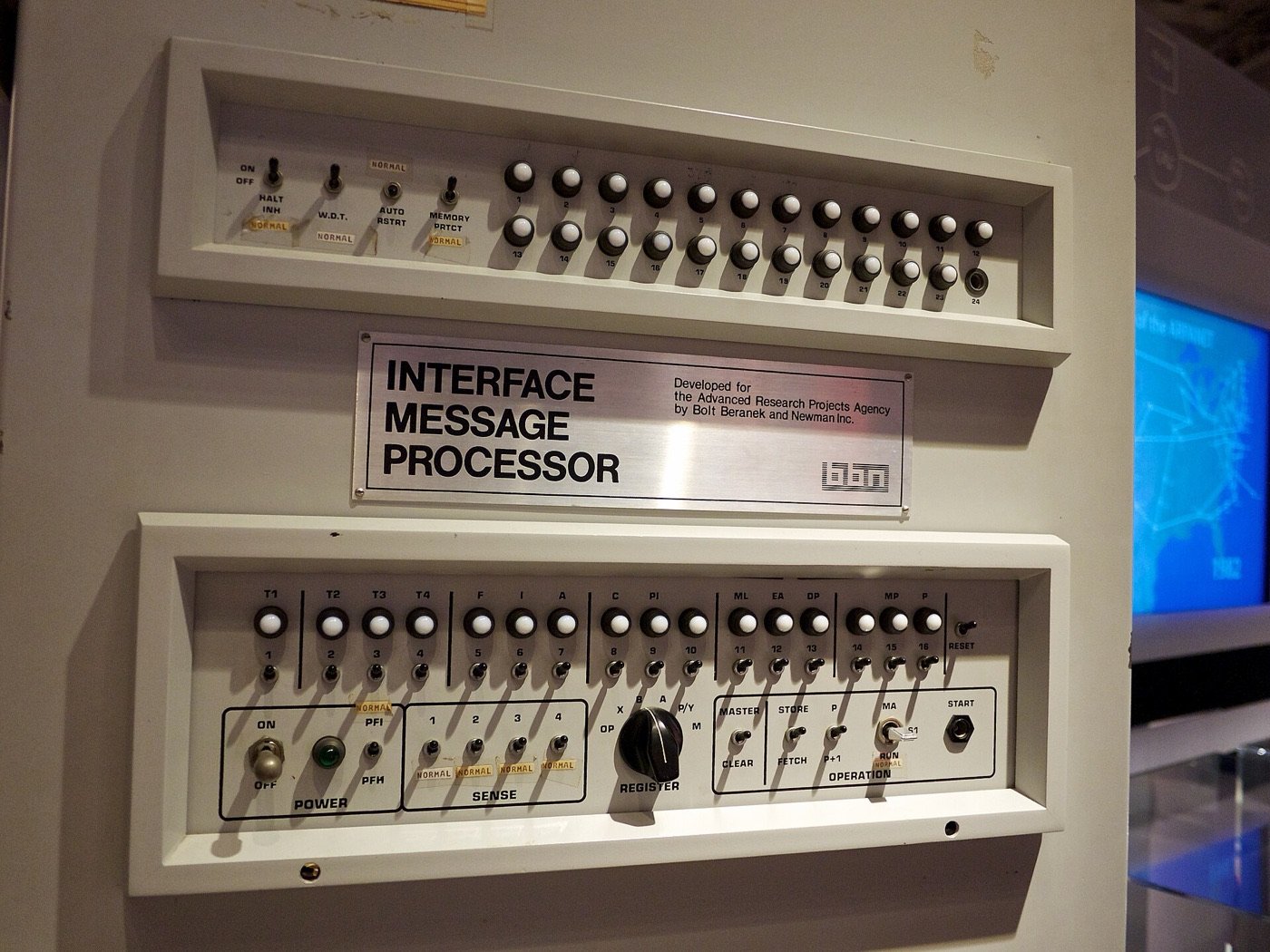
The Interface Message Processor (IMP) built by BBN, ARPANET's first 'router', at the Computer History Museum. Photo: Don DeBold, Wikimedia Commons, CC BY 2.0

29 October 1969, around 10:30 p.m. In Professor Leonard Kleinrock's lab at UCLA, student programmer Charley Kline began typing "LOGIN" on a computer at the Stanford Research Institute (SRI), about 560 km away.

He sent L, and it arrived. He sent O, and that arrived too. When he sent G, the SRI system crashed. So the first message ever sent on ARPANET, the ancestor of the internet, was "LO". About an hour later the full login worked.

The problem it solved

ARPA, an agency of the US Defense Department, wanted expensive computers in distant places to be linked so researchers could share them. A small computer called the IMP (Interface Message Processor) was placed in front of each host. It was built by the company BBN, and it is the ancestor of today's router.

16 October–2 November 2026 (special combined issue)9nabh24.com/udaan
Nabh24Udaan · Issue 2Tech History & Research
Tech History

From packets to a 'network of networks'

How one idea, sending data in pieces, ended up connecting the whole world

Packet switching: the real magic

On an old telephone call the whole line stayed reserved for you. ARPANET did it differently: break a message into small packets, let each packet find its own route, and reassemble them at the destination. The idea came independently from Paul Baran in the US and Donald Davies in Britain; the word "packet" is Davies's.

The journey after that

1971Ray Tomlinson sent the first networked email and began using the @ sign in addresses.
1974Vint Cerf and Bob Kahn published the design of TCP/IP, which lets different networks talk to each other.
1983On 1 January ARPANET switched fully to TCP/IP, often called the birthday of the internet.
1989At CERN, Tim Berners-Lee proposed the World Wide Web.
1990ARPANET was shut down, but the network it started kept growing.
1995On 15 August VSNL launched public internet service in India.

Today

According to the ITU, about 5.5 billion people, roughly 68% of the world, were using the internet in 2024. All of it began with two letters, "LO", and a crash.

The lesson

The first attempt was incomplete, but the team did not treat it as failure. The bug was fixed within an hour and the work moved on. Big breakthroughs often begin with small, imperfect steps like this.

16 October–2 November 2026 (special combined issue)10nabh24.com/udaan
Nabh24Udaan · Issue 2Genius
Genius
Genius

Meant to be an engineer, chose physics

Homi Jehangir Bhabha: one decision that gave India nuclear science

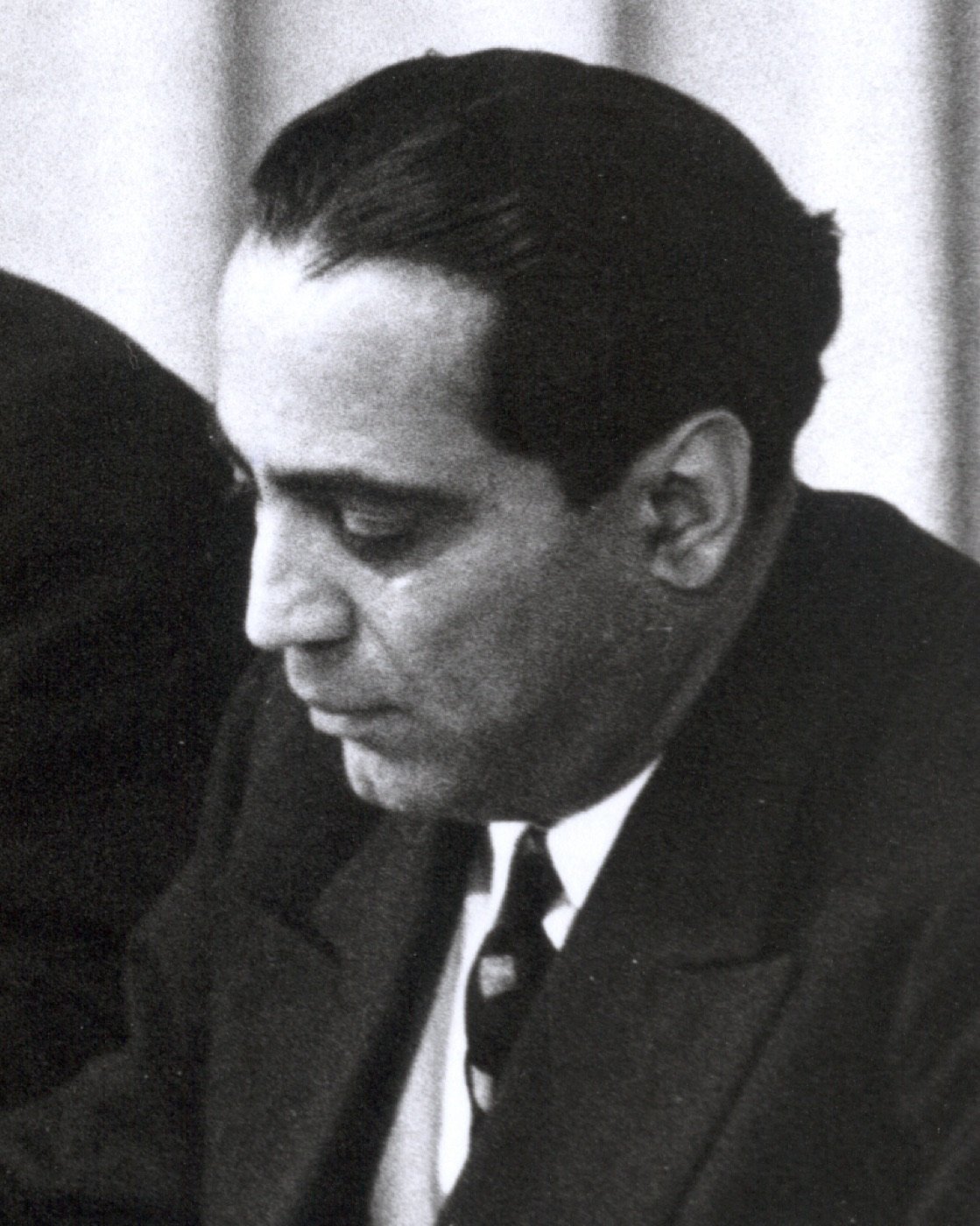
Homi Jehangir Bhabha (1909–1966). Photo: Wikimedia Commons, public domain

Homi Jehangir Bhabha was born on 30 October 1909 into a wealthy Parsi family in Bombay (now Mumbai). The family's plan was clear: he would study mechanical engineering at Cambridge and come back to a senior job at Tata Steel.

Bhabha went to Cambridge in 1927. But his heart turned not to engineering but to physics. He wrote to his father plainly that business or an engineering job was not for him; he wanted to do physics.

A compromise, then his own path

His father set one condition: finish engineering first. Bhabha passed his engineering exams with a first class in 1930, went on to study mathematics, and completed his PhD in 1935. He kept his word to the family without giving up his dream.

16 October–2 November 2026 (special combined issue)11nabh24.com/udaan
Nabh24Udaan · Issue 2Genius
Genius

The letter that created TIFR

The war kept him in India, and he laid the foundations of science here

Explorer of cosmic rays

At Cambridge Bhabha worked on cosmic rays, fast particles arriving from space. In 1937, with German physicist Walter Heitler, he explained how these particles create a 'shower' (cascade) of particles in the atmosphere. Leading scientists began to notice him.

Held back by war, gained by India

In 1939 Bhabha was home in India on holiday when World War II broke out, and he could not go back. He began teaching in C.V. Raman's department at the Indian Institute of Science, Bangalore. In 1941 he was elected a Fellow of the Royal Society, London.

The 1944 letter

Bhabha felt India needed a separate institute for basic research in physics. In 1944 he wrote to the Sir Dorabji Tata Trust. His argument: when nuclear energy starts producing electricity in a few decades, India should not have to look abroad for experts. The Trust agreed.

1945On 1 June the Tata Institute of Fundamental Research (TIFR) began; it later moved to Mumbai.
1948The Atomic Energy Commission was formed, with Bhabha as chairman.
1954The Department of Atomic Energy was set up; Bhabha received the Padma Bhushan.
1956Apsara, Asia's first research reactor, started at Trombay.
16 October–2 November 2026 (special combined issue)12nabh24.com/udaan
Nabh24Udaan · Issue 2Genius
Genius

The thorium dream and an unfinished flight

Bhabha's three-stage plan is still India's roadmap

The three-stage plan

India has little uranium but huge reserves of thorium, especially in the beach sands of Kerala and Odisha. With this in mind Bhabha designed a three-stage nuclear power programme:

  • Stage one: reactors that run on natural uranium.
  • Stage two: fast breeder reactors, which also produce fuel.
  • Stage three: electricity from thorium.
  • Seven decades later India's nuclear programme still follows this map.

More than a scientist

Bhabha was a fine painter and a lover of music. The beauty of the TIFR building and its art collection reflect these interests. In August 1955 he presided over the first United Nations conference on the peaceful uses of atomic energy in Geneva.

A sudden end

On 24 January 1966, Air India flight AI 101 crashed into Mont Blanc in the Alps. Bhabha was on board. He was only 56. Vikram Sarabhai succeeded him as chairman of the Atomic Energy Commission.

Lessons for us

  • Follow your heart, but honour your responsibilities. Bhabha finished engineering first, then chose physics.
  • Turn hardship into opportunity. When the war stopped him from going back, he built a world-class institute at home.
  • Think long-term. His plans are still working decades after he was gone.
16 October–2 November 2026 (special combined issue)13nabh24.com/udaan
Nabh24Udaan · Issue 2Global Tech Story
Global Tech Story
Global Tech Story

A military system that reached every pocket

The GPS story: built for war, opened to everyone after a tragedy

Illustration of a GPS Block IIIA satellite. More than 24 such satellites circle about 20,200 km above Earth. Image: U.S. Air Force, Wikimedia Commons, public domain

Whenever you book a cab, order food or find your way in a new city, GPS (Global Positioning System) is working in the background. Yet it was built not for the public but for the US military.

The beginning

In 1973 a design was settled under US Air Force officer Bradford Parkinson. The first GPS satellite was launched on 22 February 1978, and the full system was declared operational in 1995.

A tragedy that opened the door

On 1 September 1983 Korean Air Lines flight KAL 007 strayed into Soviet airspace and was shot down, killing 269 people. Afterwards President Ronald Reagan announced that GPS, once ready, would be available free for civilian aircraft and the public.

16 October–2 November 2026 (special combined issue)14nabh24.com/udaan
Nabh24Udaan · Issue 2Global Tech Story
Global Tech Story

Einstein, 'deliberate errors' and India's NavIC

The science behind GPS, and why India built its own system

Without Einstein, GPS would be wrong

Every GPS satellite carries a highly precise atomic clock. It keeps broadcasting the time, and your phone measures how long the signal took to arrive. But because gravity is weaker up there and the satellite moves fast, Einstein's relativity makes its clock run about 38 microseconds a day ahead of clocks on Earth. Left uncorrected, the position error would grow by several kilometres every day.

The 'deliberate error' switched off

At first the US deliberately degraded the civilian signal (Selective Availability) so an enemy could not use it fully. It was switched off on 1 May 2000, and civilian GPS became about ten times more accurate. The real age of car navigation and mobile apps began here.

India's own NavIC

Depending entirely on another country's system is a risk, and India learnt that lesson too. ISRO built IRNSS, whose first satellite launched on 1 July 2013. In 2016 it was named NavIC. It covers India and a region of about 1,500 km around it.

Other systems in the world

  • GLONASS: Russia
  • Galileo: European Union
  • BeiDou: China

The lesson

A technology built for war became the foundation of countless businesses the moment it was opened to all. Sharing knowledge does not reduce its value; it multiplies it.

16 October–2 November 2026 (special combined issue)15nabh24.com/udaan
Nabh24Udaan · Issue 2Failure Story
Failure Story
Failure Story

Nokia: when it was in every other hand

From a paper mill to the world's biggest mobile company

The Nokia 3310 (2000), famous for being nearly unbreakable. Photo: Michael Brandtner, Wikimedia Commons, public domain

Nokia did not begin with phones. In 1865 Fredrik Idestam set up a wood-pulp mill in Finland. Over the years the company made rubber boots, tyres, cables and even TVs.

In the 1990s CEO Jorma Ollila made a bold call: drop everything else and focus on telecom. The bet paid off. In 1998 Nokia overtook Motorola to become the world's largest mobile phone maker.

India's first mobile call

On 31 July 1995, West Bengal Chief Minister Jyoti Basu made India's first mobile call, from Kolkata to Union minister Sukh Ram in Delhi. The call was made on a Nokia handset.

16 October–2 November 2026 (special combined issue)16nabh24.com/udaan
Nabh24Udaan · Issue 2Failure Story
Failure Story

Why Nokia fell, and what we can learn

The touchscreen era arrived, and the biggest player woke up late

2007: the game changed

In January 2007 Apple unveiled the iPhone, and Google's Android followed a year later. A phone's strength was no longer its keypad or toughness but software, apps and the touchscreen. Nokia was then making more than one in three phones sold worldwide, but its software, Symbian, began to look slow and dated.

Where it went wrong

  • Drunk on success: with such a huge market share, the company assumed customers would stay.
  • A hardware mindset: Nokia excelled at making phones but fell behind in building a world of app developers.
  • A late, big bet: in February 2011 new CEO Stephen Elop dropped Nokia's own software for Microsoft's Windows Phone. By then Android and the iPhone were far ahead.
2007The iPhone arrives; Nokia is still on top.
2011Partnership with Microsoft; Symbian abandoned.
2013Nokia announces the sale of its phone business to Microsoft for about €5.44 billion.
2014The deal closes; Nokia's phones now belong to Microsoft.

Nokia today

The company did not die. Today Nokia is one of the world's big makers of mobile network equipment, such as the gear inside 4G and 5G towers.

Lessons for us

  • Today's success is no guarantee of tomorrow's. Spot change early.
  • Customers buy an experience, not just a product.
  • You can rise after a fall: Nokia saved itself by choosing a new path.
16 October–2 November 2026 (special combined issue)17nabh24.com/udaan
Nabh24Udaan · Issue 2Success Story
Success Story
Success Story

Mars on the very first try

5 November 2013: when ISRO did what no one in the world had done

Diagram of Mangalyaan (Mars Orbiter Mission) with its solar panel and antennas. Image: ISRO, Wikimedia Commons, GODL-India

On 15 August 2012, Prime Minister Manmohan Singh announced from the Red Fort that India would send a spacecraft to Mars. Time was very short. ISRO's scientists readied the spacecraft in about 15 months.

At 2:38 p.m. on 5 November 2013, the PSLV-C25 rocket lifted off from Sriharikota carrying Mangalyaan, the Mars Orbiter Mission.

A world first

On 24 September 2014, Mangalyaan entered orbit around Mars. With that India became:

  • the first Asian country to reach Mars orbit,
  • the first country in the world to succeed on its very first attempt,
  • and ISRO became the fourth space agency to reach Mars, after the Soviet Union, NASA and the European Space Agency.
16 October–2 November 2026 (special combined issue)18nabh24.com/udaan
Nabh24Udaan · Issue 2Success Story
Success Story

A small rocket, a big idea

Without a powerful rocket, scientists borrowed speed from orbits around Earth

Beating a weakness with a trick

India did not then have a rocket powerful enough to throw a spacecraft straight to Mars. So ISRO found a way. The PSLV first left the spacecraft in Earth orbit. Then its own engine was fired several times to stretch the orbit bit by bit, like a swing pushed higher with every push.

On 1 December 2013 a final push freed the spacecraft from Earth's pull and set it on course for Mars.

A 300-day sleep, then a 4-second test

During the roughly ten-month journey the main engine stayed off. The biggest fear was whether it would restart after so long. On 22 September 2014 scientists tested it by firing it for just 4 seconds. It worked. Two days later, on 24 September, the engine did its full job and the spacecraft settled into Mars orbit.

201215 August: mission announced.
20135 November: launched on PSLV-C25.
20131 December: on its way to Mars.
201424 September: enters Mars orbit.

The team

K. Radhakrishnan was ISRO chairman and S. Arunan the project director. After the success, a photo of women scientists in saris celebrating in the control room was published around the world and became a new image of India.

16 October–2 November 2026 (special combined issue)19nabh24.com/udaan
Nabh24Udaan · Issue 2Success Story
Success Story

A 6-month mission, 8 years of service

Mangalyaan gave far more than expected, and gave India new confidence

Sixteen times the plan

Mangalyaan was designed to work for just 6 months. It orbited Mars for about 8 years, sending back pictures and data. Contact was lost in April 2022, and in October 2022 ISRO declared the mission over.

What it achieved

  • The Mars Colour Camera took thousands of pictures of Mars, including full-disc images of the whole planet.
  • It collected data on the Martian atmosphere and on the moon Phobos.
  • The world saw that a deep-space mission could succeed on a small budget.

Mars in India's pocket

The ₹2,000 note issued in 2016 carried an image of Mangalyaan on its back, an honour few space missions ever get.

The road ahead

The confidence from Mangalyaan laid the foundation for bigger missions. In 2023 Chandrayaan-3 landed near the Moon's south pole, and Aditya-L1 set off the same year to study the Sun.

Lessons for us

  • When resources are small, think big. Without a powerful rocket, scientists borrowed speed from orbits around Earth.
  • A deadline can be a strength, not a fear. Fifteen months of preparation united the team.
  • Success on the first try is possible when every step is checked carefully, like the 4-second engine test.
16 October–2 November 2026 (special combined issue)20nabh24.com/udaan
Nabh24Udaan · Issue 2Little-known Facts
Little-known Facts
Little-known Facts

True, but hard to believe

From cyclone names to a day on Venus, ten surprising facts

1. Who names cyclones?

Cyclones in the north Indian Ocean are named by 13 countries of the region together. A new list of 169 names, 13 from each country, was released in April 2020. This week's 'Murasu' is regarded as the first purely Tamil cyclone name. In Tamil, murasu means a war drum.

2. A day on Venus is longer than its year

Venus takes about 243 days to spin once on its axis but only about 225 days to go round the Sun. So a day there is longer than a year.

3. Three hearts

An octopus has three hearts and blue blood, because a copper-based protein, not an iron-based one, carries its oxygen.

4. A banana is a berry, a strawberry is not

By the botanical definition a banana is a berry, but a strawberry is not.

5. The 38-minute war

The war between Britain and Zanzibar on 27 August 1896 lasted about 38 minutes. It is considered the shortest war in history.

6. Sunlight is 8 minutes old

Light from the Sun takes about 8 minutes 20 seconds to reach Earth. The Sun you see is 8 minutes in the past.

7. Babies have more bones

A newborn has about 270-300 bones. Many fuse as we grow, leaving 206 in an adult.

8. India has one of the wettest places on Earth

Mawsynram in Meghalaya is counted among the rainiest places in the world, with an average of about 11,800 mm of rain a year.

9. The Eiffel Tower grows in summer

Iron expands in heat, so the Eiffel Tower in Paris can grow up to about 15 centimetres taller in summer.

10. The Great Wall is not visible from the Moon

It is a myth that the Great Wall of China can be seen from the Moon with the naked eye. It is long, but far too narrow.

16 October–2 November 2026 (special combined issue)21nabh24.com/udaan
Nabh24Udaan · Issue 2Quiz
Test yourself

Udaan Quiz: 18 questions from this issue

  1. Under which Articles did the Supreme Court hold internet access to be a fundamental right?

    1. a) Articles 14 and 32
    2. b) Articles 21 and 19(1)(a)
    3. c) Articles 25 and 26
    4. d) Articles 39 and 51A
  2. From which date did the India-New Zealand Free Trade Agreement come into force?

    1. a) 2 October 2026
    2. b) 15 October 2026
    3. c) 20 October 2026
    4. d) 1 November 2026
  3. Who won the 2026 Ballon d'Or (men)?

    1. a) Kylian Mbappé
    2. b) Lamine Yamal
    3. c) Harry Kane
    4. d) Erling Haaland
  4. From where was the 24th PM-Kisan instalment released?

    1. a) Varanasi, Uttar Pradesh
    2. b) Bhildi, Banaskantha (Gujarat)
    3. c) Bhagalpur, Bihar
    4. d) Yavatmal, Maharashtra
  5. What was the first message sent over ARPANET?

    1. a) HELLO
    2. b) LO
    3. c) LOGIN
    4. d) TEST
  6. Which two scientists designed TCP/IP?

    1. a) Tim Berners-Lee and Ray Tomlinson
    2. b) Vint Cerf and Bob Kahn
    3. c) Paul Baran and Donald Davies
    4. d) Leonard Kleinrock and Charley Kline
  7. When was Homi Jehangir Bhabha born?

    1. a) 30 October 1909
    2. b) 12 August 1919
    3. c) 7 November 1888
    4. d) 15 October 1931
  8. Which was Asia's first research reactor?

    1. a) Cirus
    2. b) Dhruva
    3. c) Apsara
    4. d) Kamini
  9. Bhabha's three-stage nuclear programme ultimately aims to use which fuel?

    1. a) Coal
    2. b) Plutonium
    3. c) Thorium
    4. d) Hydrogen
  10. What is the name of India's regional navigation system?

    1. a) GLONASS
    2. b) Galileo
    3. c) NavIC
    4. d) BeiDou
  11. When was Selective Availability, the deliberate error in civilian GPS, switched off?

    1. a) 1 September 1983
    2. b) 22 February 1978
    3. c) 1 May 2000
    4. d) 1 July 2013
  12. Who made India's first mobile call, and to whom?

    1. a) Rajiv Gandhi to Sam Pitroda
    2. b) Jyoti Basu to Sukh Ram
    3. c) P.V. Narasimha Rao to Manmohan Singh
    4. d) Atal Bihari Vajpayee to Pramod Mahajan
  13. To which company did Nokia sell its phone business?

    1. a) Apple
    2. b) Samsung
    3. c) Microsoft
    4. d) Google
  14. On which date did Mangalyaan enter Mars orbit?

    1. a) 5 November 2013
    2. b) 1 December 2013
    3. c) 24 September 2014
    4. d) 23 August 2023
  15. Which rocket launched Mangalyaan?

    1. a) GSLV-F10
    2. b) PSLV-C25
    3. c) LVM3-M4
    4. d) SSLV-D2
  16. Which banknote carried an image of Mangalyaan on its back?

    1. a) ₹500
    2. b) ₹200
    3. c) ₹2,000
    4. d) ₹100
  17. How many names are in the 2020 list of north Indian Ocean cyclone names?

    1. a) 64
    2. b) 100
    3. c) 169
    4. d) 200
  18. On which planet is a day longer than its year?

    1. a) Mars
    2. b) Venus
    3. c) Mercury
    4. d) Jupiter

Answers: 1-b 2-c 3-c 4-b 5-b 6-b 7-a 8-c 9-c 10-c 11-c 12-b 13-c 14-c 15-b 16-c 17-c 18-b

16 October–2 November 2026 (special combined issue)22nabh24.com/udaan
Advertisement

The whole country's news, in one place

India, states, politics, business, sports, jobs and more, in Hindi and English. Free, every day.

36

States & UTs

News from every state and union territory, with a page for each

LIVE

Live TV

Leading Hindi news channels, live in one place

24x7

Breaking news

Fresh headlines through the day, in Hindi and English

JOBS

Jobs & money

Recruitment, salary, tax, savings and rule changes explained

DAILY

Rashifal & Panchang

Daily horoscope, panchang, quotes and "on this day"

APP

Android app

Instant news alerts, saved stories to read offline, live cricket

Visitnabh24.comUdaan magazine every week at nabh24.com/udaan
QR: nabh24.com/app
Scan to get the Android app
Lesson of the week

Never turn a shortage into an excuse

Every story in this issue says the same thing. Mangalyaan had no powerful rocket, so ISRO borrowed speed from orbits around Earth. Bhabha could not return abroad because of the war, so he built a world-class institute at home. The internet's first message ended in a crash, but the team was back within an hour. And Nokia's story reminds us that the biggest shortage is not of resources but of the ability to see change coming.

Next issue

Next issue: current affairs for 3–12 November, the science around Diwali and Chhath, a new tech story and fresh little-known facts. At nabh24.com/udaan.

Thought of the week
"When nuclear energy has been successfully applied for power production in, say, a couple of decades from now, India will not have to look abroad for its experts but will find them ready at hand."
— Homi J. Bhabha, from his 1944 letter to the Sir Dorabji Tata Trust, the letter that created TIFR.
Udaan

A new issue every week, free, in Hindi and English.

nabh24.com/udaan

Sources for every page are listed online with this issue. Photos: Wikimedia Commons (credited on each page).

Sources for this issue

Current Affairs

Tech History & Research

Genius

Global Tech Story

Failure Story

Success Story

Little-known Facts

All issues of Udaan · नभ 24 home